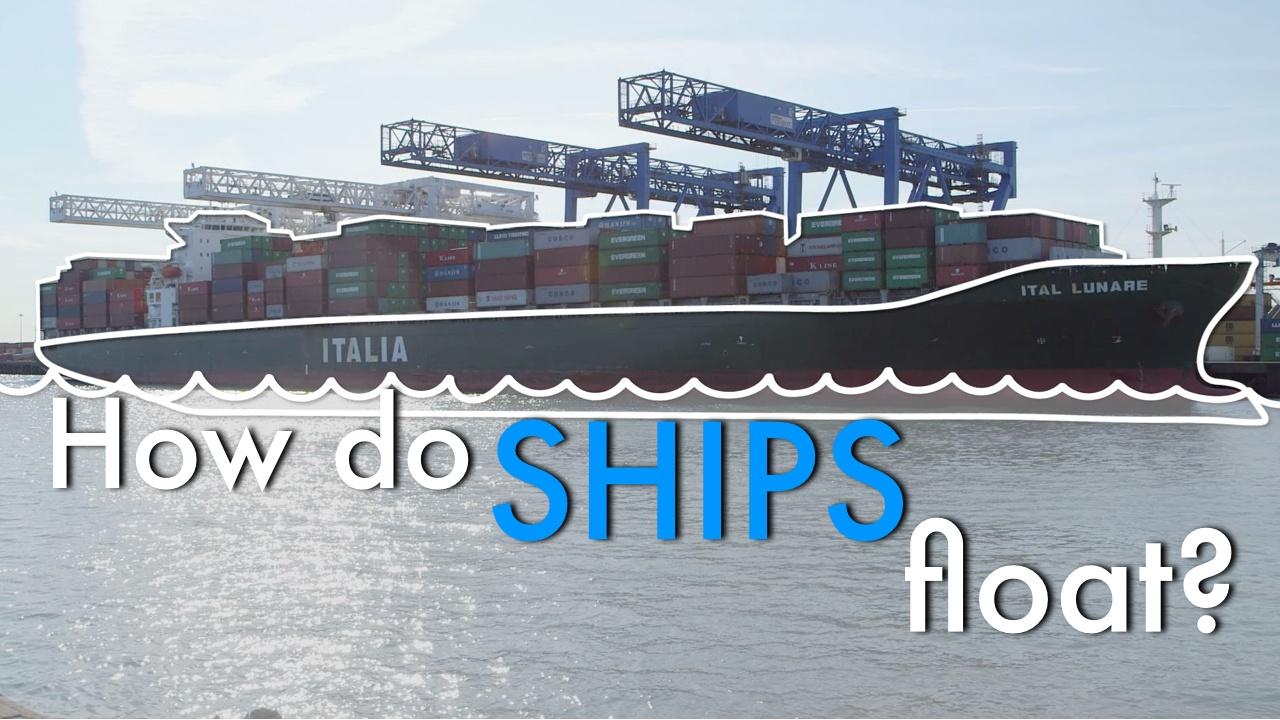
The weight of a cruise ship must be distributed evenly to prevent it from tipping over. This is achieved by placing heavy items like engines and fuel tanks at the bottom of the ship and lighter items like cabins and restaurants at the top. The hull of a cruise ship is designed to be streamlined and efficient, allowing the ship to move through the water with minimal resistance. The most common hull shape for cruise ships is the u-shaped hull, which provides stability and buoyancy.
Archimedes Principle
According to the buoyancy principle, an item submerged in a liquid experiences an upward pull. The upper decks are much lighter in comparison, there’s much more open space that is full of air. The lower part of the ship is much heavier than the higher decks. In understanding buoyancy further, it is worth explaining the role of forces. He used the principle to figure out if a goldsmith was cutting his gold with a less-dense metal, such as silver (as the story goes). This blog helps over a million people to plan their cruises each month.
Royal Caribbean International
In the event of a breach in the outer hull, the inner hull can help prevent water from flooding the ship and causing it to sink. The use of double hulls has become increasingly common in recent years, as cruise lines seek to enhance the safety of their vessels. Overall, the buoyancy principle and the design of the ship’s hull are the key factors that enable cruise ships to float. As you delve deeper into the fascinating world of cruise ships, you will discover many more interesting facts about these impressive vessels.
Other Applications of Buoyancy
The world's largest cruise ship is making its first transatlantic crossing from Finland to Fort Lauderdale, Fla., where it will make its U.S. debut. Though colossal, the ship relies on the same physical principles as its smaller brethren to stay afloat. Most modern cruise ships also have objects called stabilizing fins attached to the hull. They help the boat maintain a forward direction and a steady center of gravity.
Robot bartenders, 10-floor slides and racing car tracks – jaw-dropping secrets of the world’s biggest cru... - The Sun
Robot bartenders, 10-floor slides and racing car tracks – jaw-dropping secrets of the world’s biggest cru....
Posted: Tue, 23 Jan 2024 08:00:00 GMT [source]
Ship Buoyancy and Stability: How Ships Float and Stay Upright
Stabilizers are designed to reduce the rolling motion of the ship, while navigation systems can help the ship avoid the worst of the weather. Cruise ships are equipped with a variety of safety features to prevent sinking. When a cruise ship is in motion, it is propelled forward by its engines.
The watertight divider is installed through the ship’s interior. It can be closed to prevent water from rushing in if the hull is damaged. Limiting the inflow of water prevents cruise ships from sinking and flooding. This is used to build vessels containing double hulls (one hull is located inside the other) to provide additional protection. Vessels also have bulkheads helping them float in case the cruise ship receives major damage. Displacement and buoyancy aren’t the only factors keeping cruise ships floating.

Most cruise ships have sharp angles where the hull meets the deck so that there is no flat surface for things to rest against. Also, because the decks are angled downward towards the center of the vessel, any weight placed on top of the ship has nowhere else to go but down. Lastly, since the entire structure sits higher than the surrounding waters, the pressure exerted by the water pushes upwards rather than downwards. Together all of these elements help make cruising safer than other types of transportation. Have you ever looked at a giant ship and wondered how such a heavy object made of steel floats in water?
Cruise ships are designed with a large, bulbous bow and a tapered stern to reduce drag and increase speed. The hull is also curved, allowing the water to flow smoothly around it and creating lift, which helps keep the ship afloat. Further, while steel is primarily used on the lower decks, lighter materials such as aluminum are used on the upper decks.
Norovirus Cases On Cruise Ships Skyrocket: Here’s Why—And How To Avoid Getting Sick - Forbes
Norovirus Cases On Cruise Ships Skyrocket: Here’s Why—And How To Avoid Getting Sick.
Posted: Thu, 13 Jul 2023 07:00:00 GMT [source]
Come aboard our adults-only cruises for a kids-free getaway at sea.
In order to mitigate the effects of this problem, cruise ships are outfitted with a number of devices that reduce their tendency to roll. The encircling water will exert a pressure that is proportional to the volume that is being pushed, and this force will fight back on the object. If the two forces are balanced, the thing you’re looking at will float. If the ship does not return to a stable equilibrium, and the heel increases, the ship will eventually capsize. And no matter the size of a water craft, rogue waves are always a concern.
As long as there are no leaks, the displacement of water equals the ship’s weight. When the ship moves backward, the water flows back into its original position. In other words, the flow of water around the hull creates pressure pushing upward on the bottom of the boat. This causes the bow to rise up until the net forces acting on the vessel cancel each other out.
They work by creating resistance against the water, which helps to reduce the ship’s motion. The ship needs fuel to power its engines and generate electricity. The amount of fuel required for a voyage can be significant, and it is essential to manage the weight of the fuel to ensure that the ship remains balanced. Fuel tanks are located in the lower part of the ship to help maintain the ship’s center of gravity. Buoyancy is the force that allows objects to float in a fluid. This force is created by the difference in pressure between the top and bottom of an object submerged in a fluid.
The density of water is affected by temperature and salinity, which can affect a ship’s buoyancy. The hull is designed to be wider at the bottom, which helps to distribute the weight of the ship more evenly and increase its stability. Additionally, the hull is curved upwards at the front and the back, which helps to reduce drag and improve the ship’s speed. Since 2012, the only report of a cruise ship sinking with passengers onboard was a Chinese river vessel in 2015.
The hollowed-out shells contain enough air to lower the average density of the vessel, making it less dense than water. Cruise ships can float as long as they can displace an amount of water equal to their mass. They are as long as the Empire State Building is tall and up to 20 stories high. Today’s cruise ships can accommodate up to 6,000 passengers and 2,500 crew members.
It will tend to roll over and capsize if it loses its balance, or the wind changes direction suddenly. If you are on board when this happens, your best bet is to get out of the way as quickly as possible. The safest place to be in an emergency situation like that would be inside one of the lifeboats. You should also make sure all passengers know how to use them properly. A simple example would be two blocks stacked one atop another with an empty space in between them. If we put some weights into the middle then they’ll sink because their combined force pushes down hard enough to move the center of gravity below the surface of the water.
Finally, they are designed to sit above the waves rather than ride along side of them. Engineers are careful to keep the average density of a ship (considering both the physical weight of the vessel as well as all the air) less than the average density of the water. To the seas, a cruise ship is nothing more than a leaf drifting effortlessly along the surface. The shape of the hull also has a big impact on water displacement.
The more water that is displaced, the more buoyancy force is created and the more weight it can support as the water tries to return to its original location. Remember, the ship has to displace an equal weight in water to the weight of the ship itself to float. A cruise ship, although made of steel can be lighter in weight than the seawater it displaces because it is not solid steel.


No comments:
Post a Comment